US equities & Big Tech earnings
US stocks ended a volatile week and month higher, rebounding from a sharp mid-week selloff. The Fed’s decision triggered a 1,153-point drop in the Dow on Wednesday, its worst day since April 2025, but strong technology earnings fueled a recovery. The S&P 500 closed at 7,489.72 and the Dow Jones at 52,485.03, both up about 1%, while the Nasdaq gained 1.6%. In July, the Dow rose 0.32%, but the Nasdaq declined 3.2%, with chipmakers experiencing their worst month since 2008.
Microsoft and Amazon led the recovery, rising on strong cloud and AI results that renewed interest in AI and lifted semiconductor stocks. Other megacaps underperformed: Meta fell about 9% due to an earnings miss and higher AI spending, while Apple declined on weaker services revenue and lower sales in China, despite strong iPhone demand.
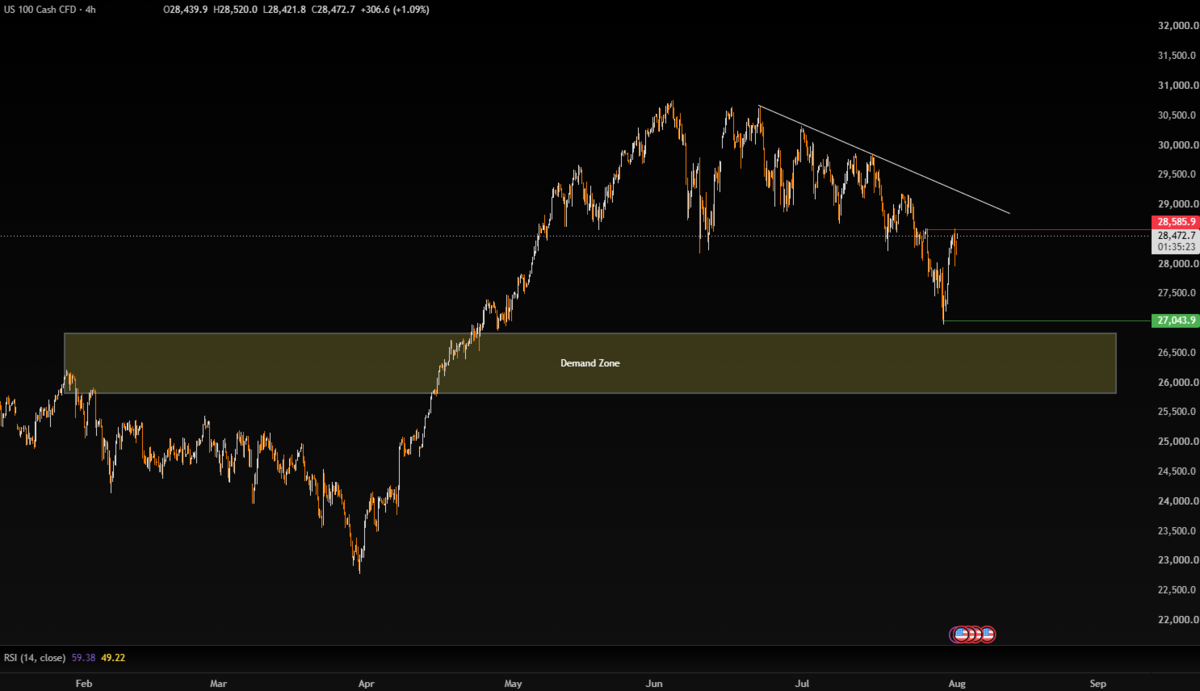
Despite the rebound, the Nasdaq remains about 10% below its early-June record, highlighting fragile sentiment around AI capital spending. With most mega-cap earnings reported, the Nasdaq’s direction now depends on the sustainability of the chip sector’s recovery.
Central banks: Fed, BoE & BoJ
Three major central banks met last week and all left rates unchanged. The Federal Reserve held at 3.50%–3.75%, with three officials dissenting in favor of a quarter-point increase. Chair Kevin Warsh provided little forward guidance. Markets now expect a possible September hike, and Treasury yields rose, with the 10-year at 4.74% and the 30-year at 5.27%, its highest since 2007. US data was mixed: Q2 GDP slowed to a 1.5% annualized rate, while core PCE eased to 3.3% year-on-year.
The Bank of England held rates at 3.75% in a hawkish 6-3 vote, warning that rising energy prices could increase inflation later this year. The Bank of Japan also held at 1% in an 8-1 vote and cautioned that core inflation may exceed its 2% target.
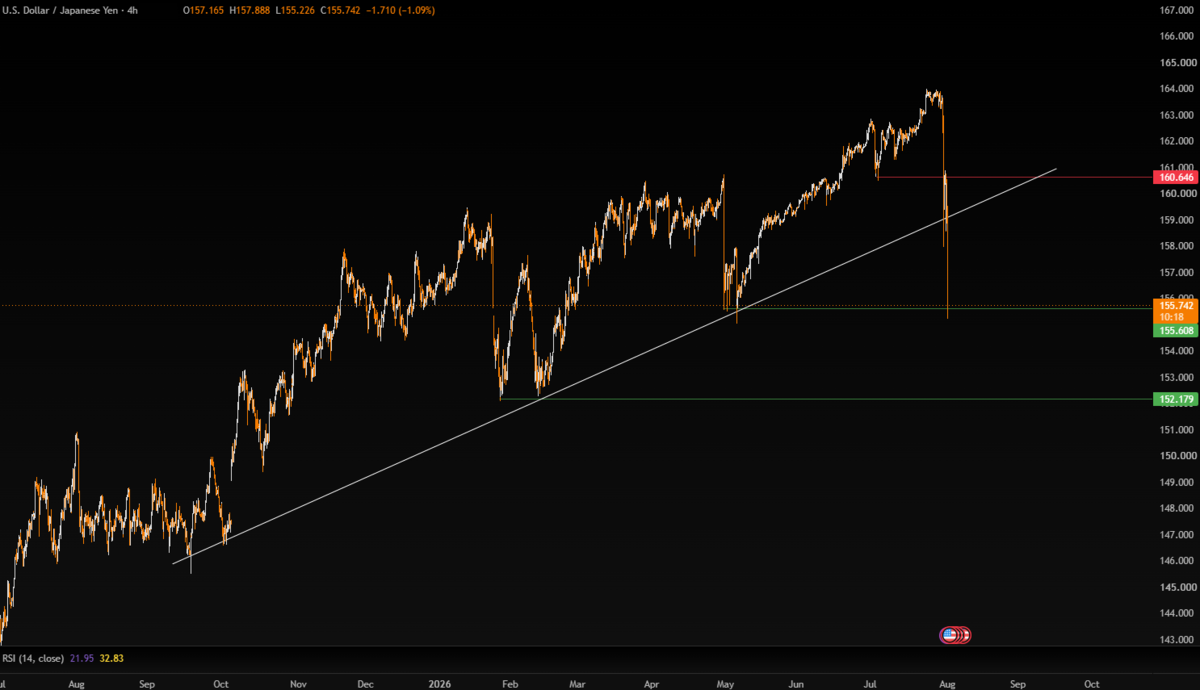
The yen was the key mover. Tokyo reportedly intervened in currency markets on Thursday, along with a US “rate check,” pulling USD/JPY from 40-year lows near 164 to around 155.5 and strengthening the yen by about 4% for the week. The pair’s next direction will depend on upcoming US data.
Middle East war & oil
In the Gulf, the US–Iran conflict continued, with Iran striking US bases in Kuwait and Bahrain after new US attacks. However, tentative signs of de-escalation emerged. Talks between Iran, Saudi Arabia, and Oman regarding the Strait of Hormuz, along with reports of “good talks” from President Trump, eased the war premium in energy markets.
Brent fell from above $100 in late July to around $90 by Friday, and WTI to about $85, as shipping through the strait partially recovered. The waterway remains contested, with Iran’s Revolutionary Guard maintaining that transit still requires permits, keeping supply risks elevated despite lower prices.
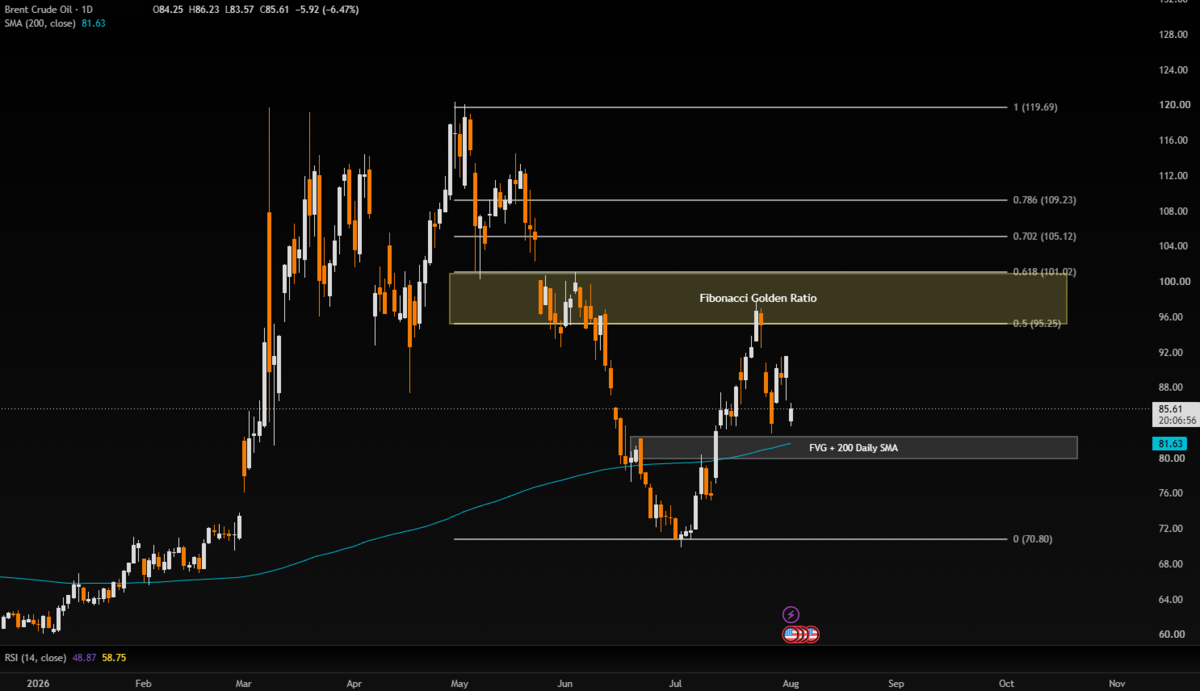
Brent is consolidating between the golden Fibonacci Ratio and 200-day SMA. A decline below the SMA will open the path toward the $70 level.
US jobs report (Friday)
The July employment report will be released Friday at 8:30 a.m. ET. Consensus expects a modest increase of about 91,000 payrolls, with the unemployment rate rising to 4.3% from 4.2%, following June’s weak gain of 57,000, the lowest in four months.
This report is critical for the September rate decision. With three FOMC members dissenting last week in favor of a hike and markets anticipating a possible move, strong data and persistent wage growth would support a hawkish stance. Conversely, weak data would raise growth concerns after Q2 GDP slowed to 1.5%. Rate-sensitive blue chips remain vulnerable following the Dow’s post-Fed decline.
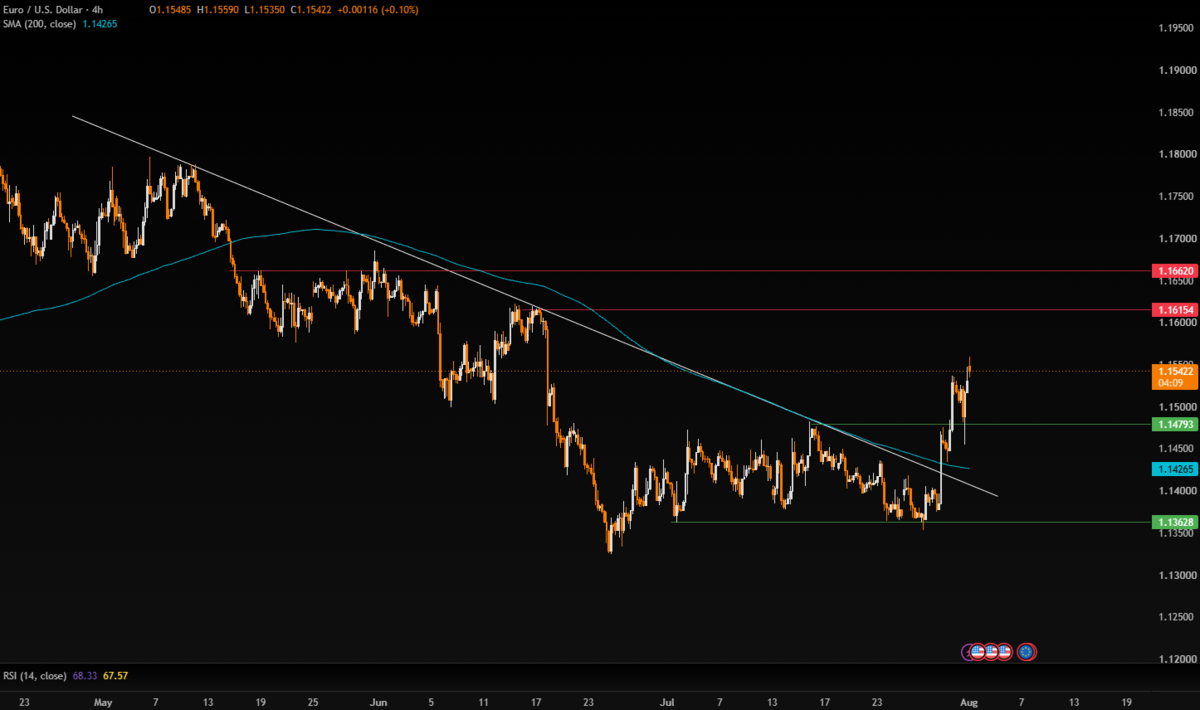
EUR/USD broke above the global declining trendline and the recent Lower High, signaling a possible trend change. The massive resistance area is around 1.1615-1.1652. This week the price may reach this zone, and traders should closely watch the reaction.
US ISM Manufacturing & Services (Monday & Wednesday)
The ISM Manufacturing index will be released Monday, followed by the larger Services index on Wednesday. These are the first activity readings of the new quarter. They follow strong July flash PMIs, with the S&P Global composite rising to 53.6, indicating resilient momentum despite ongoing conflict and high oil prices.
Analysts will closely watch the prices-paid components for signs that higher oil prices are affecting input costs, while the employment sub-indexes provide an early view on hiring ahead of payrolls. With the Fed maintaining a hawkish stance and Treasury yields at multi-year highs, evidence of strong activity and persistent price pressures would support expectations for higher rates for longer. Gold trades near $4,055 after its first monthly gain since February, supported by a weaker dollar but limited by rising real yields.
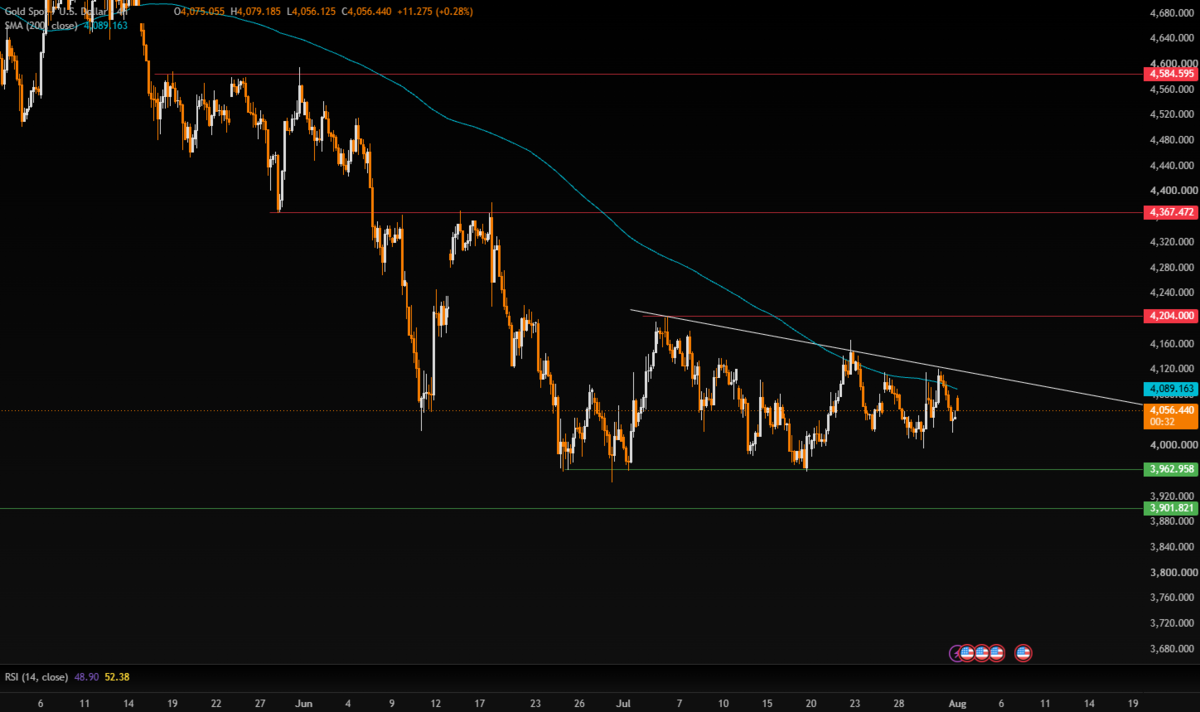
Right now, gold is trying to overcome the 200-EMA on the H4 timeframe. If buyers succeed, the price may increase to 4,204. Otherwise, a decline toward 3900 will continue.
Canada jobs report (Friday)
Statistics Canada will release the July Labor Force Survey on Friday, coinciding with the US report. In June, the unemployment rate fell to 6.5% and hiring slowed after May’s strong gain of 88,000, with manufacturing losing jobs.
The labor market remains a key factor for the Bank of Canada, which held rates at 2.25% in July and lowered its 2026 growth forecast. Trade uncertainty persists as the USMCA review, which began on 1 July, has not yet resulted in a renewal, leaving Canadian exporters and the loonie under pressure. Elevated oil prices are a mixed factor for the energy-focused economy. USD/CAD trades near 1.41, close to its yearly high of 1.4250.
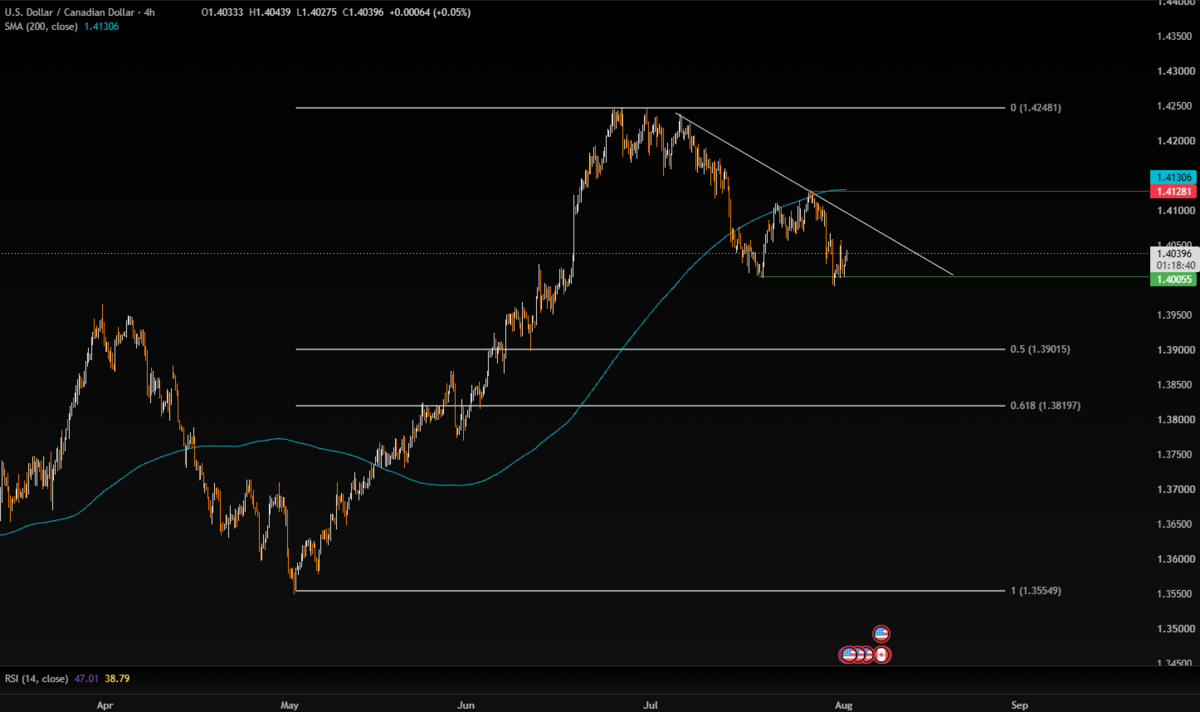
A weak jobs print could weigh on the Canadian dollar and push USD/CAD toward the 1.41 area, while a strong report could pull USD/CAD lower toward 1.39.
Bottom line
With no major central-bank meetings scheduled, the focus shifts to the US labor market. Friday’s payrolls report, along with the ISM surveys earlier in the week, will influence the September rate decision, especially after last week’s divided Fed outcome. Ongoing US–Iran tensions and a partial retreat in oil prices continue to pose inflation risks.
Trading involves risk.