Weekly Recap
Major US data: a hawkish hold sparks a bond-market revolt
The Federal Reserve maintained its policy rate at 3.50–3.75% on 29 July, but the decision unsettled markets. Three officials—Cleveland’s Beth Hammack, Minneapolis’ Neel Kashkari, and Dallas’ Lorie Logan—dissented in favor of a rate hike. Chair Kevin Warsh’s unclear press conference raised concerns that the Fed is lagging on inflation. The bond market reacted sharply: the 30-year Treasury yield rose to 5.27%, its highest since 2007, and the 10-year Treasury yield rose to 4.74%, its highest since January 2025.
Earnings results were mixed. Microsoft and Amazon each rose 15% on strong cloud and AI performance, easing concerns about overspending. In contrast, Meta fell about 8%, and Apple declined roughly 9%, its largest single-day market-cap loss, due to disappointing outlooks. Despite volatility, the US 100 gained 0.5% for the week to close at 28,274, though it lost 5.15% in July—its worst month since March 2025—yet remains up nearly 12% year-to-date.
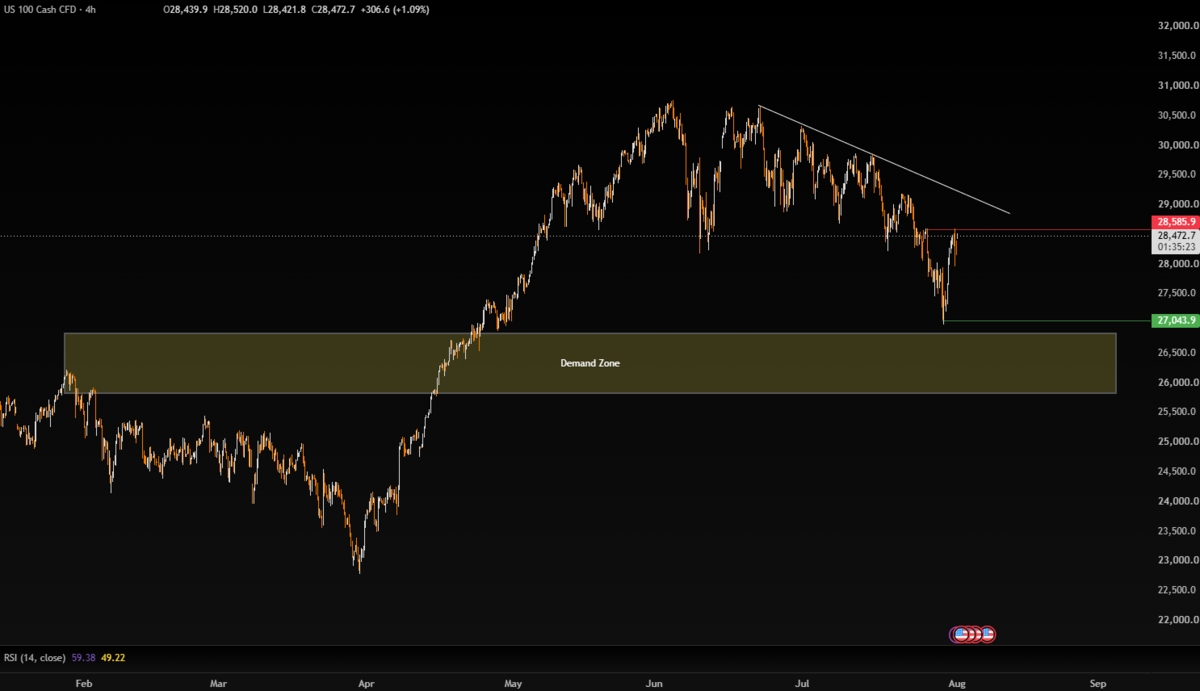
Despite the hawkish hold, the dollar weakened to six-week lows as markets viewed Warsh’s guidance as disappointing. The US 100 now faces pressure from high rates but is supported by strong AI earnings. This week’s payrolls and services data will determine the prevailing trend.
Oil: UK Brent gives back the spike but caps its best month
UK Brent closed near $90 a barrel on Friday, down about 7% for the week as it retraced part of its earlier surge above $100. However, the benchmark gained approximately 24% in July—its strongest month since the war began—driven by a persistent risk premium from the US-Iran conflict.
The moves tracked the fighting. Fresh US strikes on around a dozen Iranian targets late in the week threatened another leg of escalation, and Iran’s Revolutionary Guard declared the Strait of Hormuz open only by permit, keeping tanker flows uncertain. Prices eased into month-end as some crude continued to trade in the region despite the hostilities, and hopes of a diplomatic off-ramp resurfaced.
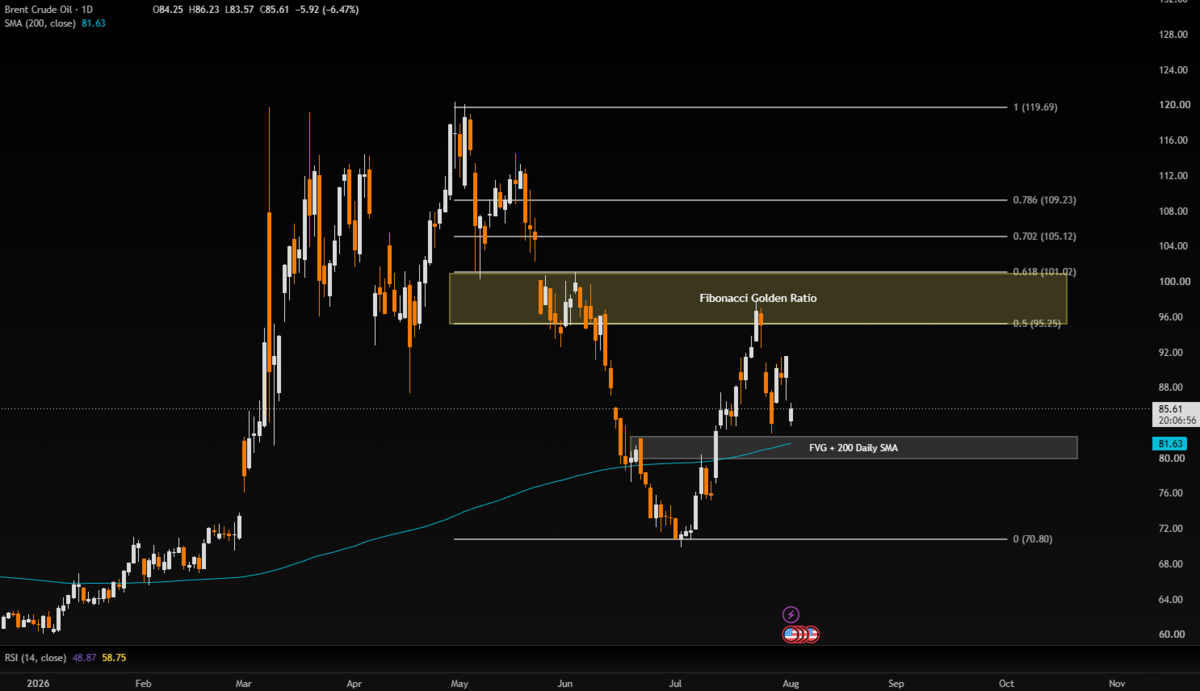
That tension between a live supply threat and intermittent flow resumption leaves Brent volatile. A renewed disruption to Gulf shipping would push it back towards $100, while durable signs of de-escalation would let more of July’s risk premium bleed out.
Eurozone: record equity highs as the euro rides a weaker dollar
European markets ended July strongly, with the STOXX 600 and Germany’s DAX reaching record highs, supported by robust corporate earnings. The rally marked the fourth consecutive monthly gain, led by technology, defense, and financial sectors.
The euro also benefited from dollar weakness. EUR/USD approached 1.15, breaking above its recent range after a weaker-than-expected US Q2 GDP report and a post-Fed dollar decline. Euro-area flash inflation rose to 2.9% in July from 2.8%, maintaining pressure on the European Central Bank and supporting expectations for another rate hike at its 10 September meeting.
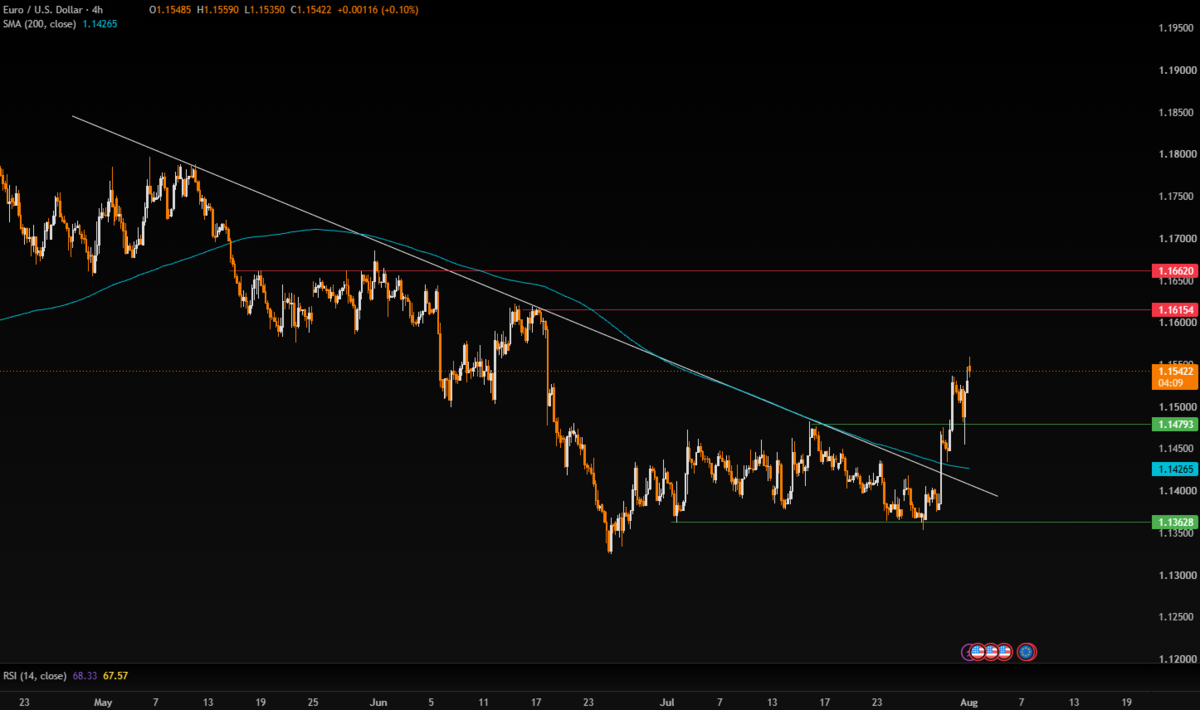
With the ECB maintaining a hawkish stance and the dollar weakening, EUR/USD is consolidating near 1.154. A clear breakout could lead to further gains toward 1.16, but a strong US payrolls report on Friday may strengthen the dollar and limit the euro’s advance.
Pakistan markets: KSE-100 rebounds as the SBP holds and oil cools
The KSE-100 rebounded sharply, gaining about 3% for the week to close near 176,094 and recovering much of the previous week’s losses. Most gains occurred on Monday, with the index rising 4.23%—over 7,200 points to 178,262—after the suspension of US-Iran strikes boosted hopes for de-escalation and the reopening of key shipping routes.
The State Bank of Pakistan supported market sentiment by keeping its policy rate at 11.5% on 27 July for a third consecutive meeting, citing easing inflation—headline CPI slowed to 11.1% in June—while noting ongoing risks from the Middle East conflict. Foreign-exchange reserves exceeded the June target, and an S&P upgrade to “B” further improved the macro outlook, although the index still finished July down 4.32%.
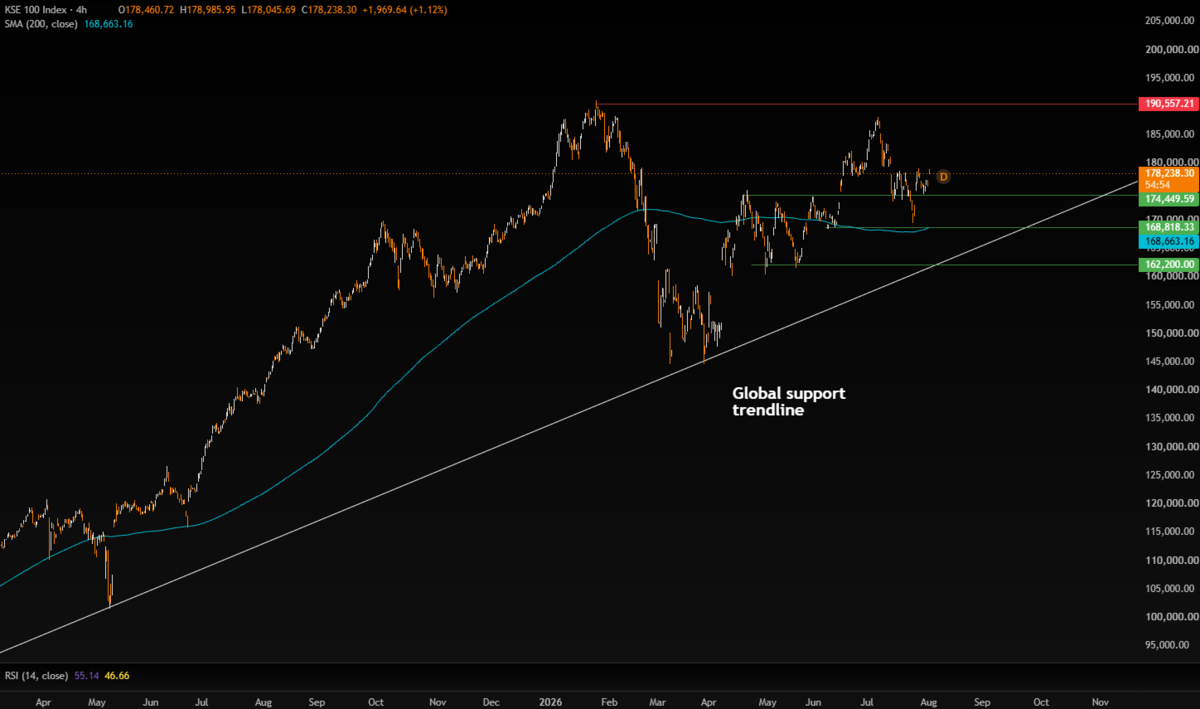
With the rate decision complete, the KSE-100’s near-term direction will depend on external factors such as the conflict’s trajectory, UK Brent prices, and the ongoing June-quarter earnings season.
Week Ahead
RBI Monetary Policy Decision — Wednesday, 5 August, 04:30 UTC
The Reserve Bank of India announces the outcome of its three-day Monetary Policy Committee meeting on Wednesday, the biggest domestic event of the week for Indian equities. Economists broadly expect the MPC to leave the repo rate unchanged at 5.25% — a level held since February — while retaining its neutral stance.
The interest will be in the tone. A poll of economists points to a hawkish hold, with rising inflation risks from geopolitical tensions, elevated oil prices and an uneven monsoon likely to keep the committee cautious; India’s June CPI breached the 4% target at 4.38%, and the RBI had already raised its FY27 inflation projection to 5.1%. Markets will parse the guidance on inflation and growth, alongside commentary on the currency and capital flows, for any hint of when the door to further easing might reopen.
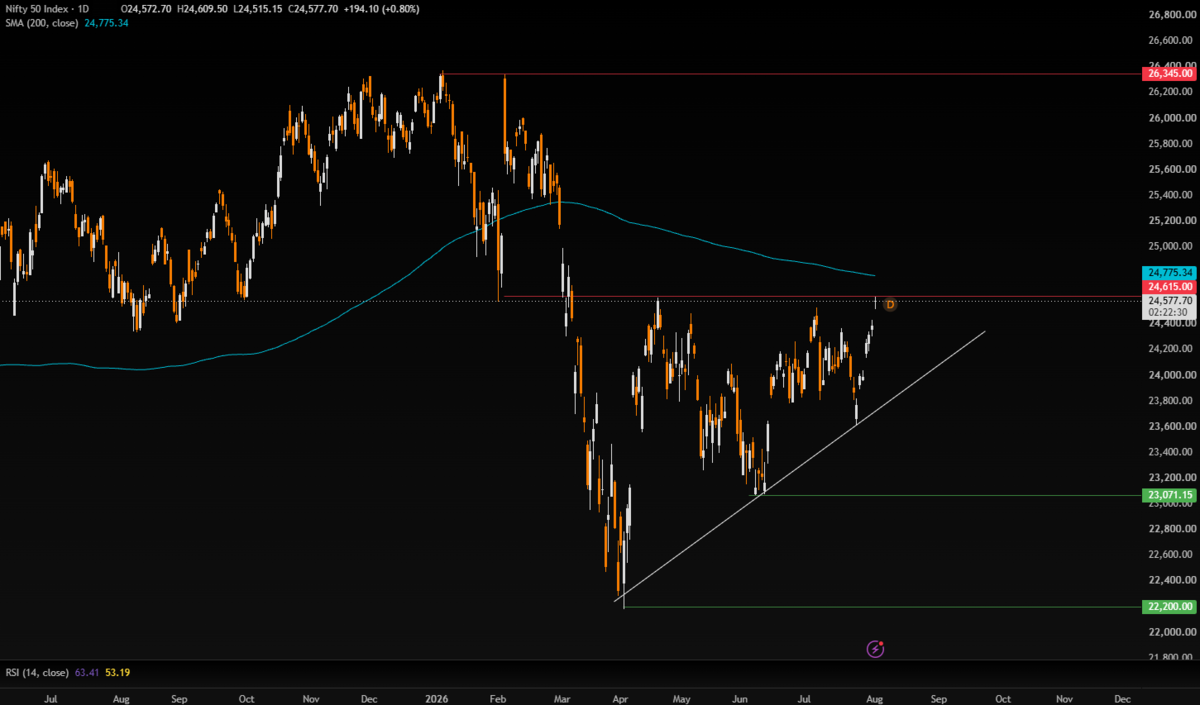
The Nifty 50 begins the week at 24,500 after a 2.6% weekly rebound, its strongest in nearly four months. With a rate hold already expected, policy guidance will influence rate-sensitive sectors such as banking, auto, and real estate. A dovish surprise or lower inflation could support further gains, while a strongly hawkish tone may limit the rally.
US Nonfarm Payrolls (July) — Friday, 7 August, 12:30 UTC
The US July employment report will be released on Friday and is considered the week’s most important data point, following a divided Fed meeting. Economists expect about 91,000 jobs added, up from June’s 57,000, with the unemployment rate rising slightly to 4.3% from 4.2%.
This report concludes a series of labor data, with ADP private payrolls (expected at 75,000) and JOLTS openings released midweek to shape expectations. The stakes are high: a weak report would intensify debate over whether the Fed is behind the curve, while a strong result would support the hawkish dissenters and the market’s two-thirds probability of a September hike.
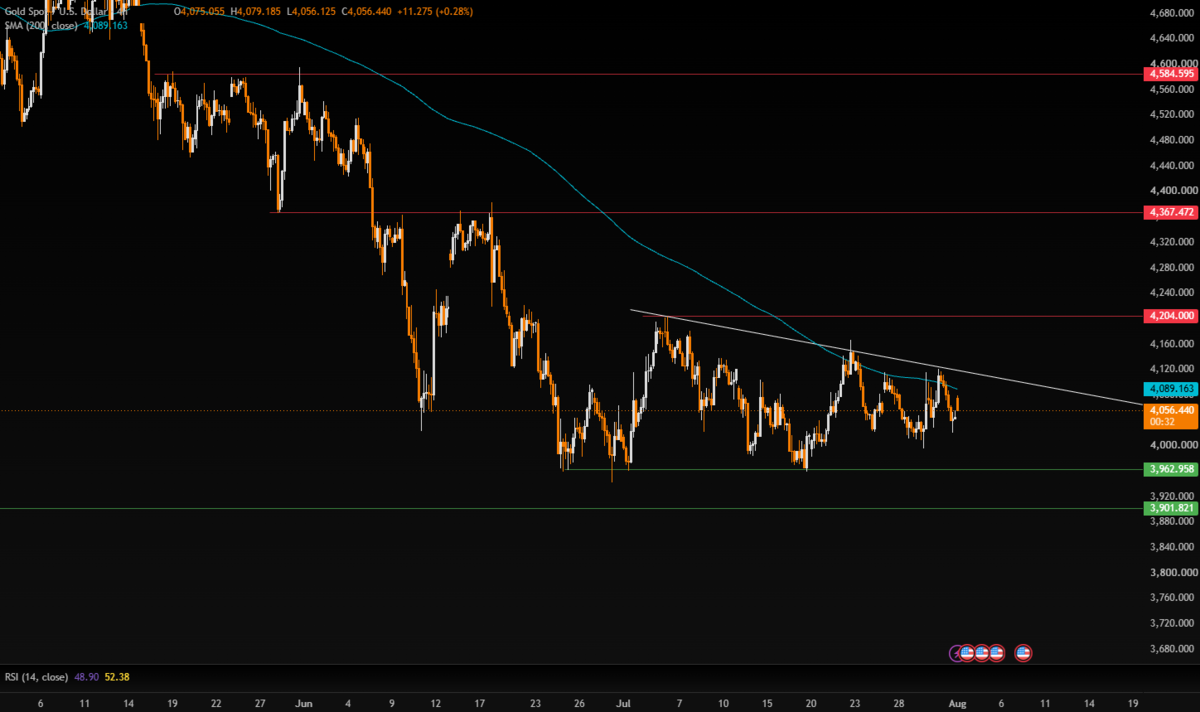
Gold starts the week above $4,100, marking its first monthly gain in five months, supported by safe-haven demand but limited by high real yields. A weak payrolls report that lowers the dollar and yields could push gold higher, while a strong report that boosts the dollar may pressure gold back toward $4,000.
US ISM Services (July) — Wednesday, 5 August, 14:00 UTC
The ISM Services index will be released on Wednesday, providing key insight into the largest segment of the US economy and informing the growth-versus-inflation debate ahead of Friday’s payrolls report. It follows Monday’s ISM Manufacturing release, expected to rise to 54.0 from 53.3, and coincides with the ADP employment report.
With questions about the Fed’s credibility, the survey’s internal details are as important as the headline. The prices-paid component will indicate if oil-driven inflation is affecting services, while the employment gauge provides a late signal for Friday’s jobs report. July’s flash PMIs showed US business activity expanding at its fastest pace in eight months, so a strong ISM reading would confirm a resilient, inflationary economy.
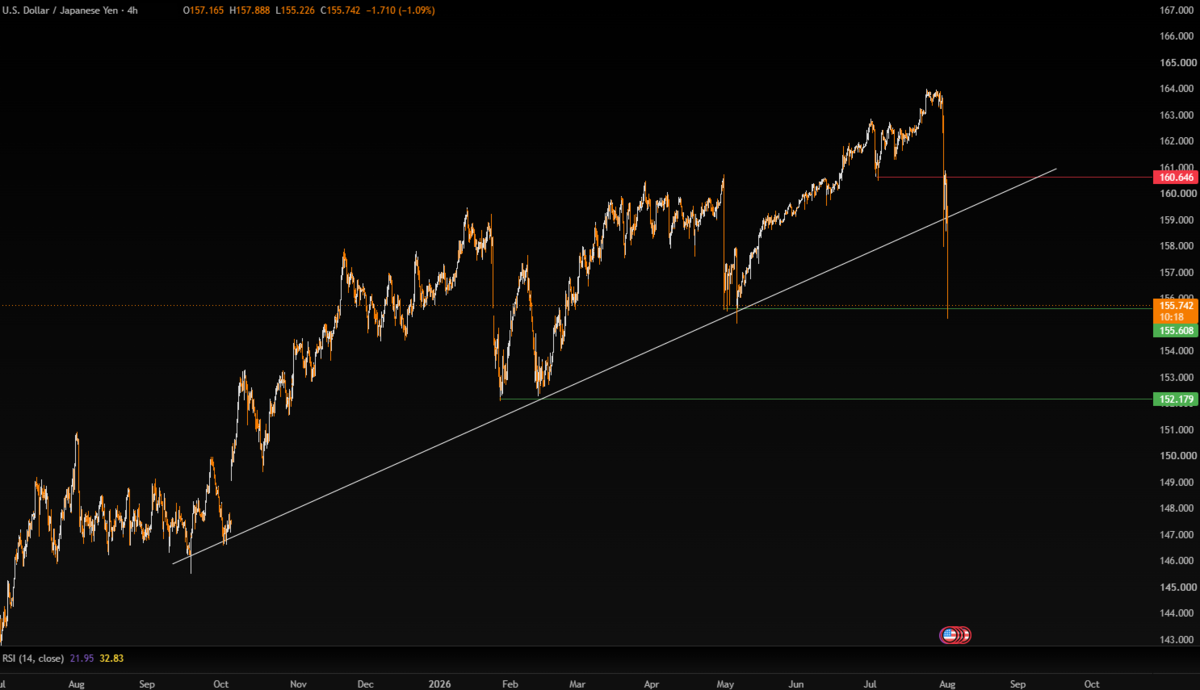
USD/JPY is trading near 155.6 after a volatile week, with the yen strengthening on a weaker dollar and intervention concerns. The Bank of Japan kept its rate at 1.00%, and Governor Ueda signaled further hikes to avoid falling behind the curve. A strong ISM Services report that raises US yields and the dollar could push USD/JPY higher, while a weak reading would support the yen’s recovery and the BoJ’s tightening stance.
Bottom line
The main driver remains the Fed’s hawkish hold and the resulting bond-market reaction, which pushed the 30-year yield to its highest since 2007 and raised concerns about the Fed’s response to inflation, all amid a persistent oil shock. This week’s US data—ADP, ISM Services, and payrolls—will directly test these concerns, influencing both Gold and USD/JPY as markets balance slow growth against persistent inflation.
Trading involves risk.